Premier Trucking Group
- Market
- USA
- Period
- 2025–2026
- Work
- Performance marketing, social media and content production
- Channels
- Meta Ads, TikTok Ads, Instagram, TikTok, Facebook and SMS
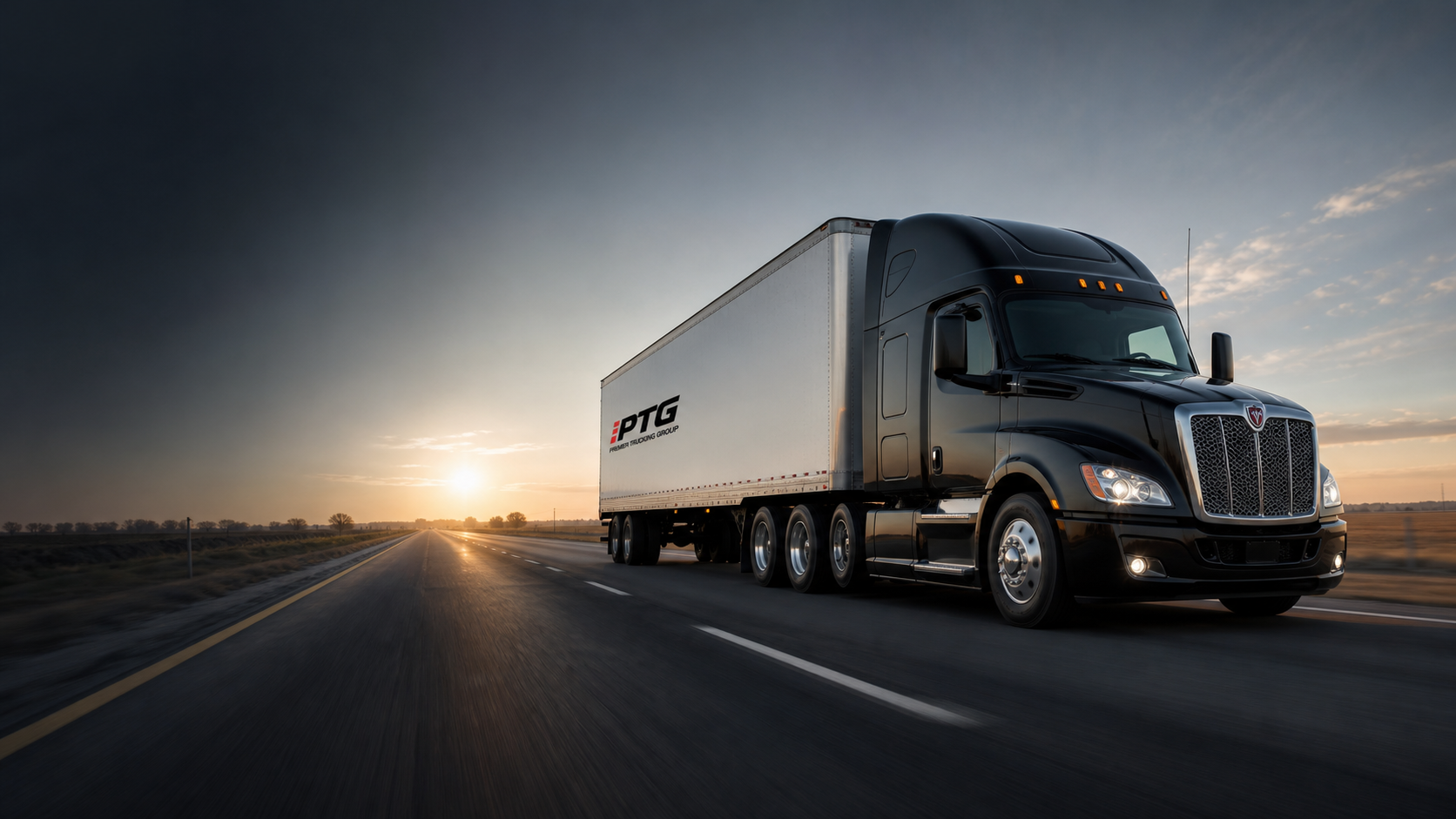
A growing fleet needed more drivers
Premier Trucking Group is a US transportation company with operational offices in Ohio and Tashkent. When we began working together, its fleet had more than 100 trucks and enough freight demand to keep expanding.
The constraint was not a shortage of loads. It was a shortage of drivers. The company needed a steady flow of qualified candidates who could move through recruitment and start work.
Our task was to build a system that could support 10–15 hires every month and keep trucks staffed.
Qualified candidates, not just form submissions
A low-cost lead was only the first step. Candidates needed a valid commercial driver’s license (CDL), at least two years of commercial driving experience, the required documentation and readiness to complete mandatory checks.
Alongside paid acquisition, we needed to develop the employer’s social presence and gradually turn content into a source of candidates in its own right.
Owner-operators
Drivers who own their truck and are looking for the right carrier relationship.
Company drivers
Drivers working with a truck supplied by the carrier.
Local roles
Additional location-specific vacancies launched as hiring needs arose.
Audience, language and geography worked together
We separated campaigns by candidate type, geography and language, using English-, Russian- and Spanish-language ads.
Ohio and the central states were the main focus. These locations fit the company’s operations and made it easier to move suitable candidates from the first conversation to starting work.
Each segment needed a relevant offer and the right qualification questions, rather than a single generic recruitment message.
One hiring funnel, from creative to first day
Before launching ads, we connected every stage of the process. The project did not use a dedicated recruitment landing page: Meta and TikTok’s native lead forms were the primary conversion points.
The forms asked about the driver’s license, experience, documents, location and whether they owned a truck. Applications flowed automatically into HubSpot, where the client’s team could track candidate status and follow-up.
- 01 · CreativeA relevant offer for the driver segment.
- 02 · CampaignMeta Ads and TikTok Ads by audience.
- 03 · Lead formKey eligibility and contact questions.
- 04 · HubSpotOne place for applications and status.
- 05 · QualificationExperience, license and documents checked.
- 06 · RecruiterConversation, interviews and onboarding.
- 07 · HireA driver who is ready to start work.
Ads built around the questions drivers actually ask
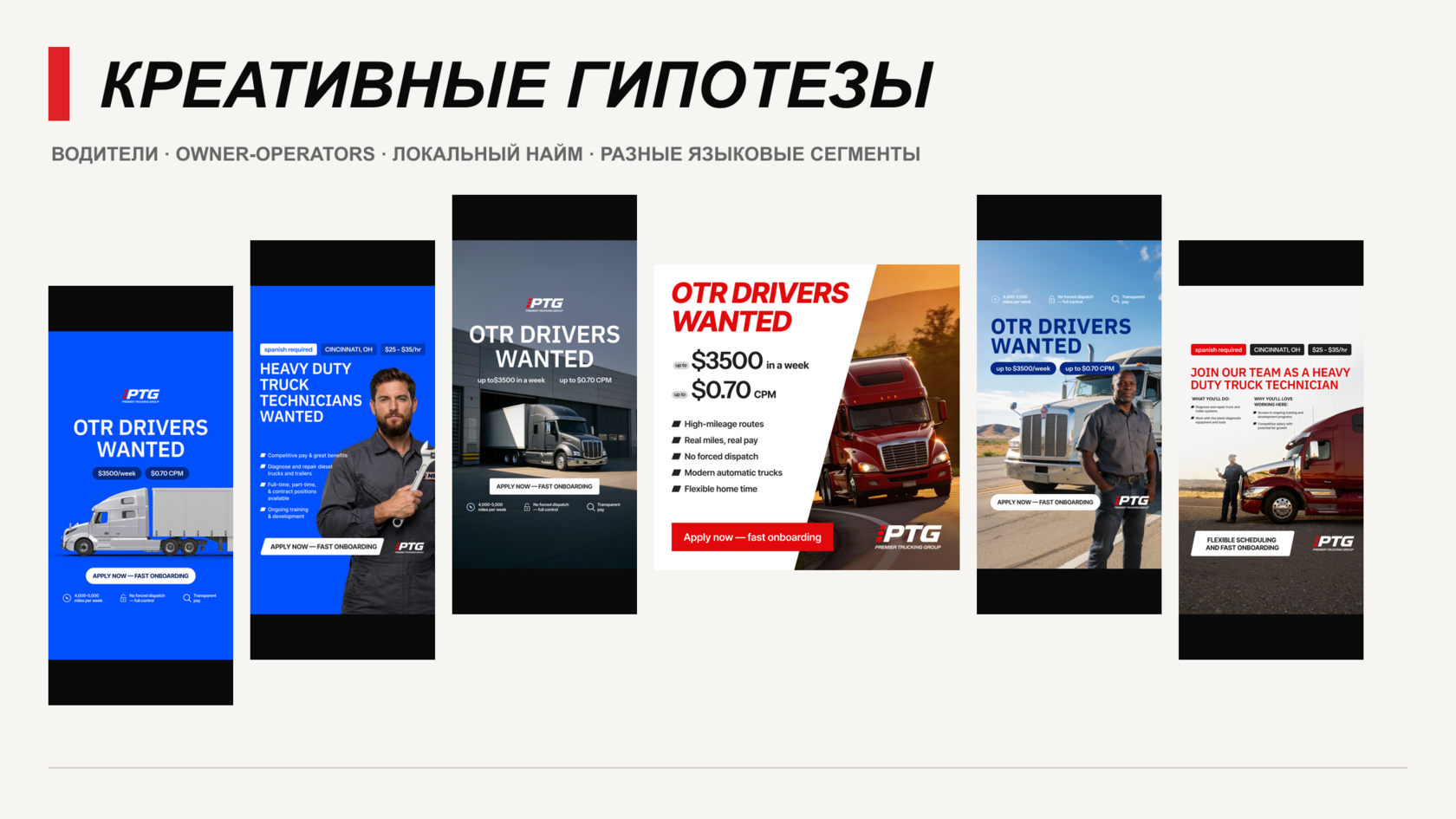
We tested formats, offers, visual styles, language segments and locations in Meta Ads and TikTok Ads. Campaigns ran for owner-operators, company drivers and local specialists.
Creative focused on tangible working conditions: pay per mile and earning potential, weekly mileage, no forced dispatch, transparent payments, truck condition and equipment, and the speed of onboarding.
A steady pipeline by the third month
The campaigns generated more than 200 applications a month. After screening for experience, documentation and other requirements, over 70 qualified candidates moved forward.
Initial leads cost less than $10. By the third month, the system was helping the company hire around 10–15 drivers per month, depending on current staffing needs and how quickly the recruitment team processed candidates.
We assessed performance beyond application volume: qualification, interviews, onboarding and the driver’s actual start date all mattered.
Reconnecting with nearly 3,000 previous candidates
The existing candidate database offered another source of conversations. We cleaned and organized almost 3,000 contacts, segmented them by relevance and developed follow-up scenarios.
SMS outreach then presented current working conditions to people who had shown interest but had not completed the hiring process.
Clean
Organize contact data before outreach.
Segment
Group candidates by relevance and status.
Reconnect
Use SMS to reopen suitable conversations.
Content production across two countries
Some material was filmed at the Tashkent office. Driver and truck footage was produced in Ohio by a local camera operator using our scripts and production briefs.
On average, the team ran one or two shoots each month and released 12–14 short videos. This made regular production possible without constant travel, while showing real employees, equipment and day-to-day operations in the US.
Drivers became the main characters
Natural, UGC-style videos performed best: drivers talking about their own experience, earnings, routes, dispatchers and life on the road.
The content plan covered working conditions, pay, dispatcher answers, truck tours, documentation, hiring advice, employee stories and lighter trend-led videos. Social content helped build trust in the employer and attract candidates.
Social media became part of recruitment
We developed the company’s Instagram, TikTok and Facebook presence from the ground up. Over the project period, the accounts gained their first 500 organic followers and generated more than 200,000 in social reach.
Drivers gradually began contacting the company through social content without an additional paid ad touchpoint. Content became a recruitment channel in its own right and reinforced paid acquisition.
Social reach is reported across the project’s social activity; it is not presented as a count of distinct people across platforms.
A connected recruitment channel, not isolated ad launches
PTG gained a system linking paid acquisition, CRM, recruiters, its existing candidate database and social content. It helped the company attract drivers consistently and support further fleet expansion.
Hiring depended on the company’s staffing needs, candidate suitability and the recruitment team’s follow-up. Low lead cost was one measure of success, not a substitute for qualification.