RMS Platform
An established brand, ready for an international market. We connected a refreshed identity, a multilingual website and lead capture into one scalable platform.
- Period
- 2025–2026 · four months
- Scope
- Brand identity, UX/UI, WordPress development, localization and SEO foundations
- Stack
- WordPress, Polylang, HubSpot

Seeing opportunity before the market
Revenue management helps hotels make decisions using demand, pricing, competitor behavior and dozens of other signals. But as the technology becomes more sophisticated, its value can become harder to explain to a first-time visitor.
The task went beyond a new logo or homepage. The company’s international business needed a consistent system: visual identity, site structure, content, demo requests and the transfer of lead data into HubSpot.
A familiar product in a new market context
The client develops revenue management software for hotels across several markets. Its international brand was already known to part of the European audience, so abandoning the name and existing recognition would have meant losing valuable equity.
Its digital presence, however, no longer matched the product. The old website was dated and primarily Russian-language. It could not explain the platform fully to international buyers.
We needed to preserve the recognizable core, separate the international communication and build a clearer route from discovery to a product demonstration.
Recognition
Keep the familiar name and the trust already built around it.
Clarity
Explain a complex technology in language hotel teams understand.
Scale
Create a system that can grow across markets and channels.
Four months of connected work
Research, identity and the digital product developed together. We tested directions on real applications while designing the website and its content system.
Research
Competitors, category communication, audiences and the existing brand.
Identity
Typography, color, graphic principles, iconography and applications.
Website
Information architecture, UX/UI, responsive layouts and components.
Development
WordPress, HubSpot forms, English and Greek versions, and SEO setup.
An impulse that moves the business forward
The visual idea is an impulse: the moment data becomes a decision. Adjust a price, notice a change in demand, compare scenarios or identify a new opportunity.
The platform does not replace the specialist. It helps them spot changes sooner and act with more confidence.
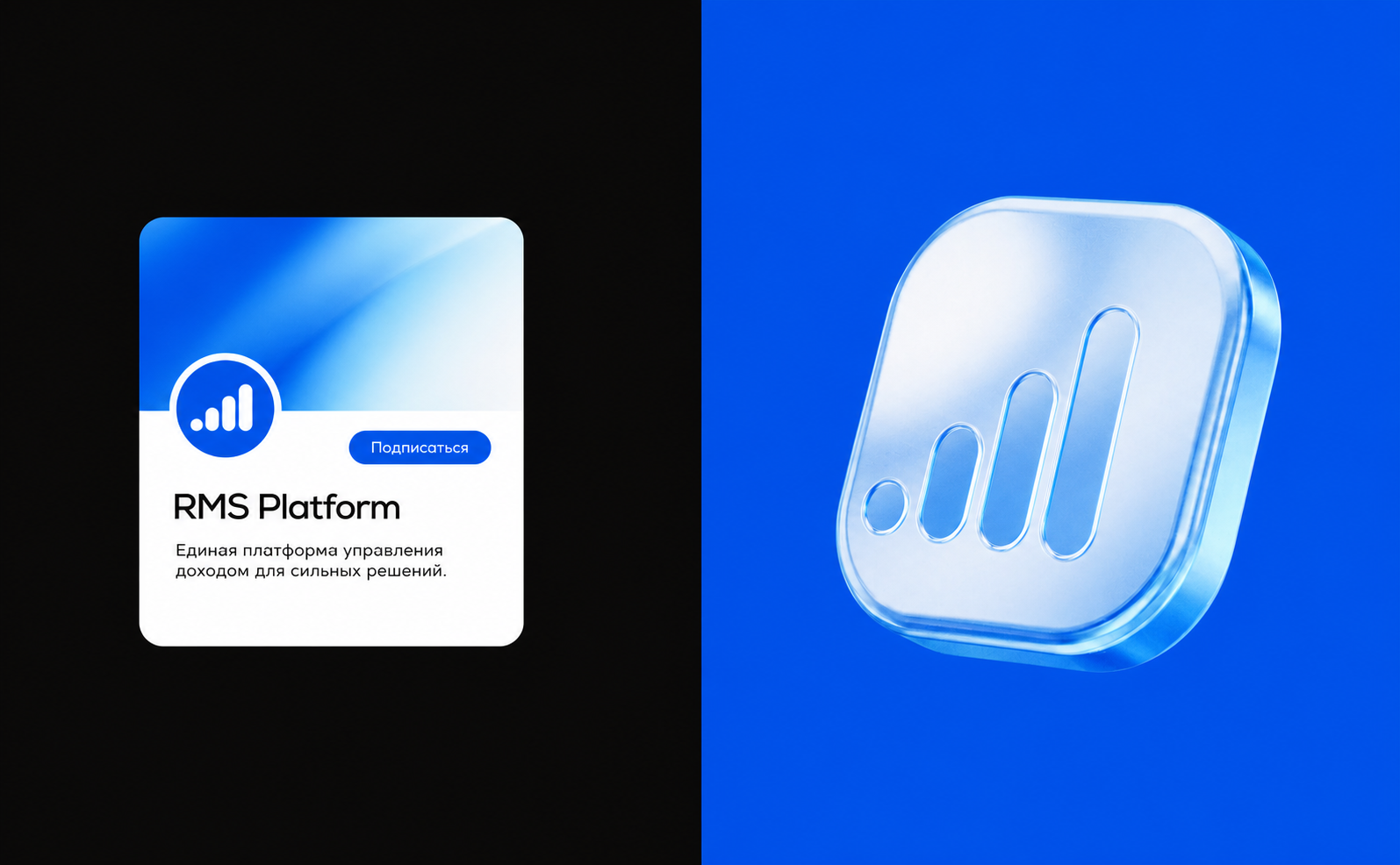
A sequence of rising elements connects an impulse, a growth chart and a series of decisions. The mark can work as a small icon, a large three-dimensional object or the basis of a broader composition.
Manrope
Clear typography for a complex product.
Color, light and a sense of technology
Electric blue carries energy and recognition. Icy tones create space, while aqua acts as a focused signal.
The glass-like material adds depth without becoming the point of the design. It expresses a system that is sophisticated inside and clear to its users.
A working identity, not just a presentation
We tested the identity across sales and internal presentations, events, social media and print. This revealed where the system needed more contrast, flexibility or recognition.
The result was a visual language different teams could use, not simply a new look for the website.
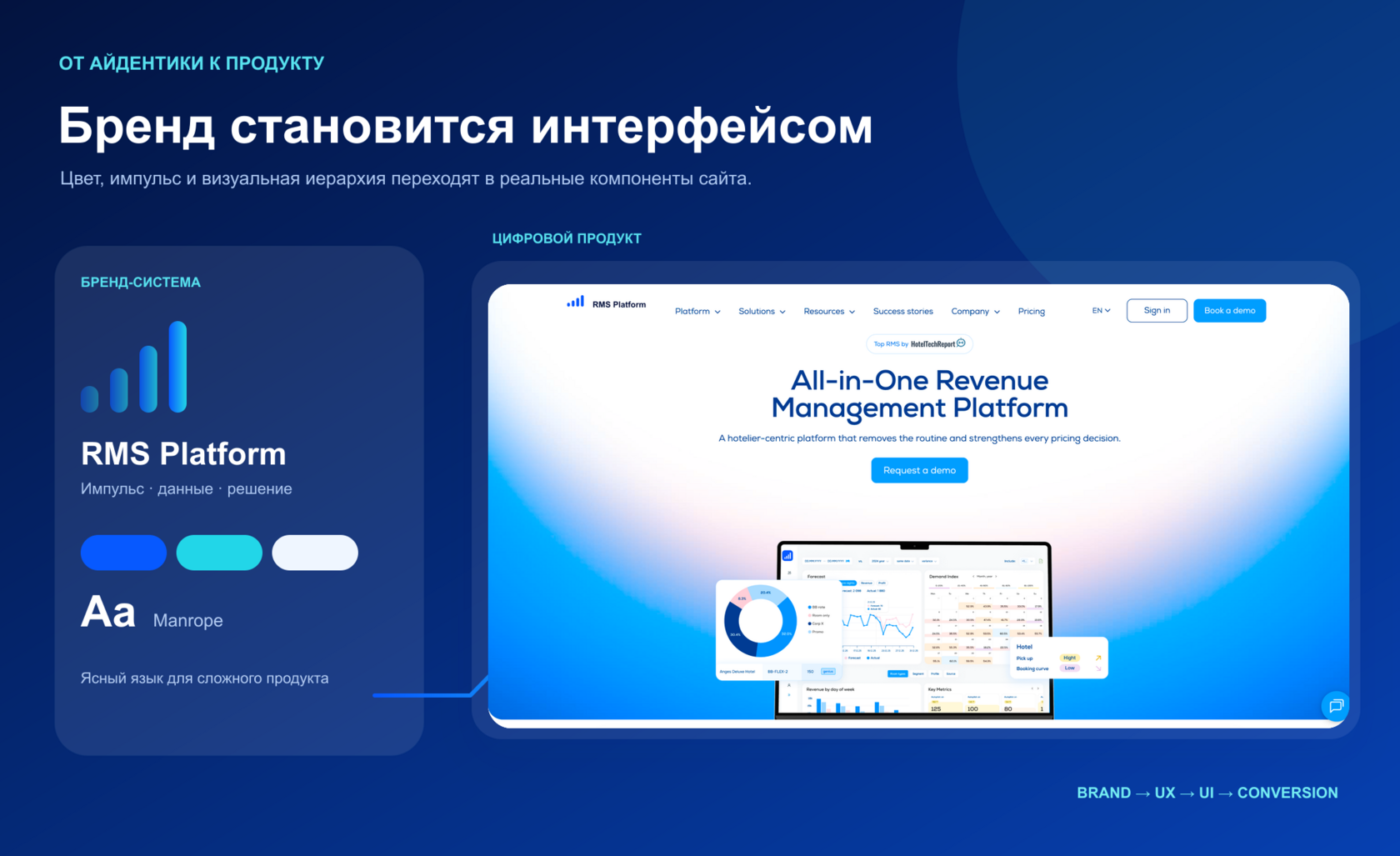
From the brand to the digital product
The website was the main point of contact with international buyers. It needed to explain the platform to several audiences, support future search visibility and pass inquiries to the client’s team.
The same colors, forms and visual rhythm carried from the identity into the interface.
One product. Several ways to choose it.
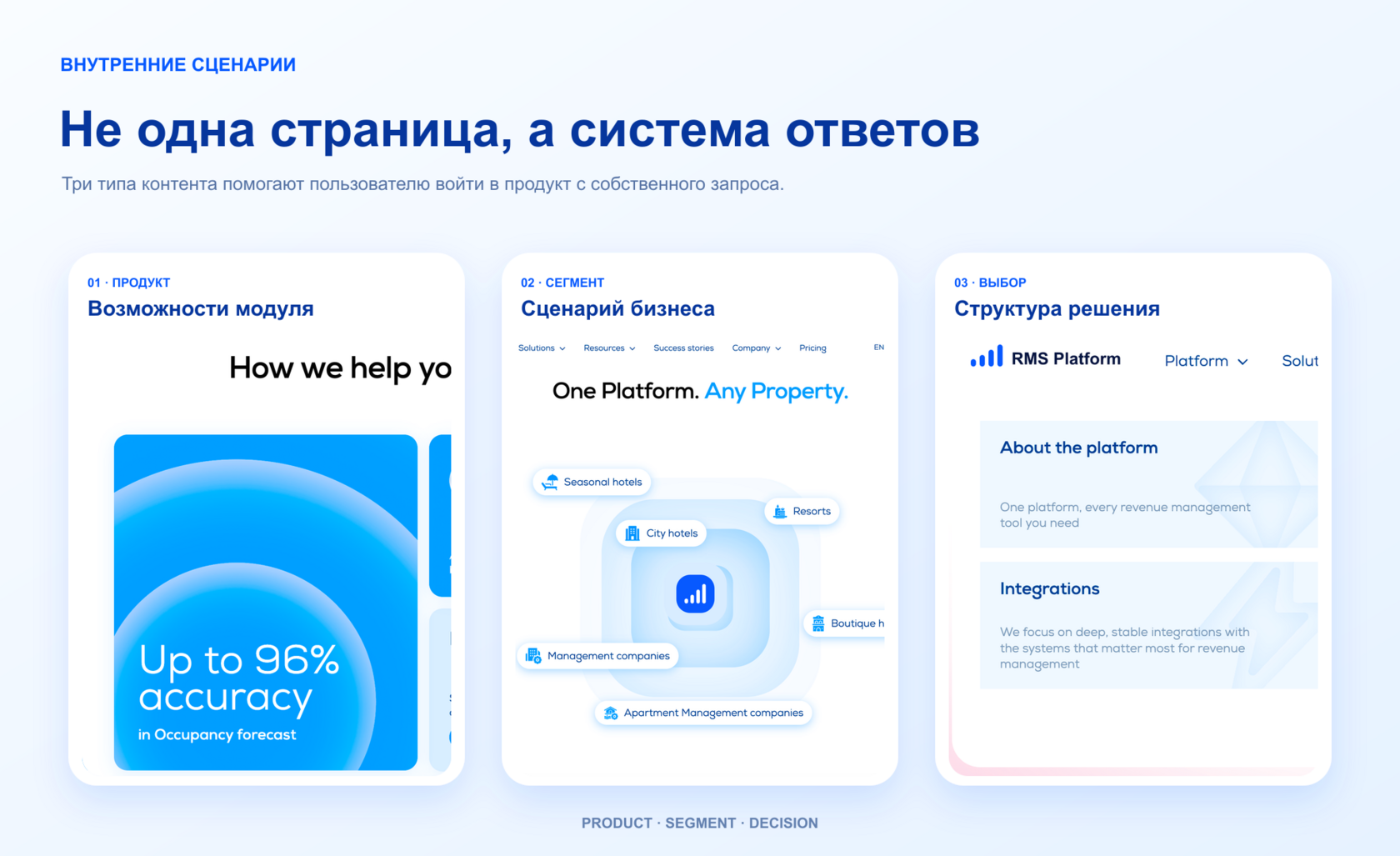
A revenue manager looks for analytical depth and automation. An owner considers revenue impact and implementation time. A general manager needs process visibility, while a management company needs to work across properties.
Instead of one universal landing page, we organized the site around products, property types and user roles.
Products
Pricing recommendations, forecasting, business intelligence, rate shopping, group analytics and integrations.
Properties
Resorts, city hotels, boutique and seasonal hotels, management companies and apartments.
Roles
Revenue managers, owners, general managers, sales directors and independent hotel teams.
A homepage that introduces the whole platform
Most traffic entered through the homepage. It had to establish trust, explain the platform and give visitors a clear next action.
- Platform positioning and a demo request.
- Evidence of experience and scale.
- Scenarios for different property types.
- Core and additional modules.
- Time savings and three levels of automation.
- Customer results and success stories.
- FAQs and a final inquiry form.
Pages built around specific questions
Not every visitor starts on the homepage. Search, advertising and direct links can take people straight to a module or industry segment.
Product pages explain a module and its role in hotel operations. Segment pages bring together relevant use cases. Pricing and integration pages address questions closer to the buying decision.
A component system across every screen
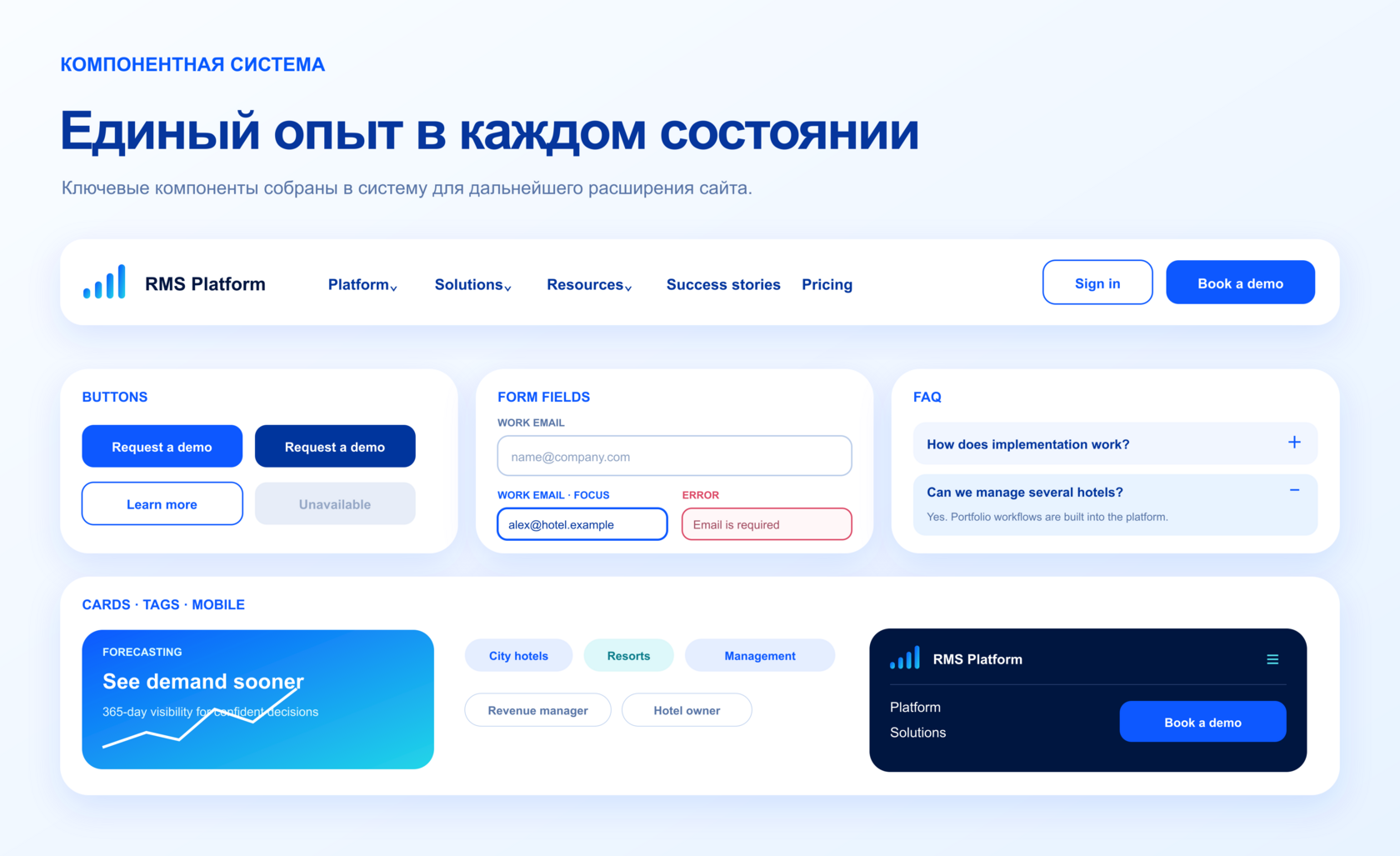
We created a UI kit and defined key component states: responsive navigation, buttons, inputs, forms, cards, tags, FAQs, modals and footer variants.
This kept the experience consistent across desktop, tablet and mobile and made future expansion easier for the client’s team.
From interest to a qualified conversation
The primary conversion is a demo request, with a newsletter subscription as a secondary path. HubSpot forms were embedded at key points in the journey.
Requests, source information and contact details enter the client’s system rather than ending as isolated emails. That connects the website to the next stage of sales follow-up.
- DiscoverProduct or segment page
- UnderstandFeatures, proof and FAQs
- RequestDemo form
- ConnectHubSpot lead record
- Follow upClient sales team
WordPress, localization and a foundation for search
After design approval, we built managed content blocks on WordPress, connected HubSpot forms and prepared English and Greek versions using Polylang.
Competitive research and future SEO needs informed the page structure. We completed the baseline SEO setup and handed over a platform the client could expand.
The client manages subsequent advertising, content and SEO. Our role was to deliver the brand and website foundation.
The brand and website became one system
In four months, the international business gained connected tools for communication and growth.
A recognizable brand
Existing equity carried into a more independent international identity across digital, sales, event and print materials.
A clearer product
Complex RMS modules organized into meaningful paths for different hotel businesses and decision-makers.
A platform to build on
A multilingual WordPress website, connected forms and a reusable design system ready for ongoing marketing.
We do not claim unverified conversion or revenue growth. The outcome presented here is the delivered brand and website system; ongoing promotion is managed by the client.